History
Since 1973.
A philanthropist — with heart and hand
Immediately after stepping away from his company, Georg Ludwig Rexroth — together with his wife Annemarie — established the Georg Ludwig Rexroth Foundation on 30 March 1973.
They contributed the proceeds from their shares in G. L. Rexroth GmbH to a foundation fund, with the aim of supporting their own development projects in the developing world and ensuring the work of social institutions through financial support.
The funds available to the foundation each year are drawn from the income of its endowment, which has been augmented through further endowments from the family, the Mannesmann group, Bosch Rexroth AG and other private donors.
In building up the foundation, Georg Ludwig Rexroth was substantially supported by Eugen Tatarko, head of personnel at Mannesmann Rexroth GmbH and managing director of the foundation until his death on 11 June 1986; by his sons Gerd and Bernd; and by long-serving authorised officer Irmgard Heider, who remained a member of the advisory board until her retirement on grounds of age in 2010.
The company has its registered office in Lohr am Main.
“Georg Ludwig Rexroth came from a family of entrepreneurs with more than 500 years of tradition in ironworking.”
In the Pakistani port city of Karachi, a school bears the name of Georg Ludwig Rexroth — a man who, in all his long life, never once set foot in Pakistan. Who, then, was this remarkable man, and why does the school carry his name?
Georg Ludwig Rexroth came from a family of entrepreneurs with more than 500 years of tradition in ironworking. From the eighteenth century onward, several members of the Rexroth family were active in the Spessart as ironmasters. In 1840 an ancestor of Rexroth acquired a half share in the lower ironworks at Lohr am Main; in 1850 he bought the other half, and in 1854 the town gained a rail connection — a matter of great importance for the company.
On 3 March 1902 the man whose name the foundation bears was born in Lohr. At that time some 70 people were employed by Rexroth's father. After leaving secondary school he studied from 1921 to 1924, graduating as a mechanical engineer. He followed this with studies in economics in Munich, completing them in 1928, and joined his father's firm as a commercial employee.
In 1931 he married Annemarie Faupel. The marriage produced two sons and two daughters. In 1933 his father made him a partner in the business. Alongside iron casting, the company produced agricultural machinery.
At the end of the Second World War in 1945, the works had been badly damaged by artillery fire. In order to obtain permission from the Allied authorities to resume production, the military government was offered the proposal that pots, pans and waffle irons be made from the materials at hand. Cooking-pot production was wound down in 1947, giving way again to agricultural machinery and machines for the meat trade.
When Georg Ludwig Rexroth noticed that the American forces were using a new kind of excavator — unknown in Germany and far more powerful — in the post-war clean-up, he sent an engineer to the United States to study the new hydraulic technology. Together with his brother, a foundry specialist, he soon began to develop the first hydraulic valves.
Hydraulics became the great success of the company and made it a world market leader. A material cause of this success was Rexroth's attitude towards his workers: they were colleagues, not subordinates. As early as the beginning of the 1960s he gave them a share in the company's profits. Strong expansion into world markets demanded, in the years that followed, more capital than the family could raise. In 1968 the Mannesmann group — famed for its seamless tubes — took a 50 per cent stake in Rexroth and in 1975 acquired the company outright. Georg Ludwig Rexroth, now 70 years old, stepped down from the management on 31 December 1972. He did not, however, retire from active life: on 30 March 1973 he established the Georg Ludwig Rexroth Foundation, which he endowed with considerable capital following the sale of the company, setting out its purpose — to be there for the sick and those in need throughout the world. In deciding whom to support, no distinction was to be made by race, politics or religion. One of the first great causes to which Georg Ludwig Rexroth devoted himself was the support of the German physician Dr Ruth Pfau, who had given her life to the fight against leprosy and worked from Karachi throughout Pakistan and Afghanistan; her work continues to this day through the team she founded.
Alarmed by the flow of refugees from Bangladesh into Orangi, Rexroth — with the support of the Siemens company — first provided water tanks for drinking-water supply.
Later the idea arose of supporting education through the founding of a school, for education is the most important gift that can be passed on to young people, so that they may in time shape their own lives. Rexroth's particular aim was to support girls, who in Pakistan are still at a disadvantage when it comes to education.
Georg Ludwig Rexroth died on 13 June 1992 at the age of 90. His work was recognised through many honours: on 30 March 1977 he was made an honorary citizen of his home town of Lohr. A year later the President of the Federal Republic of Germany, Walter Scheel, awarded him the Federal Cross of Merit, First Class, of the Order of Merit of the Federal Republic of Germany.
The Rexroth Foundation provides support not only in Pakistan. It assists those in need in many countries around the world — for example in South Africa, in South America, in India and in the poorer countries of Eastern Europe, as set out under "Projects".
That his ideas can be carried on more than thirty years after his death is a measure of Rexroth's entrepreneurial foresight. The foundation's capital is held by a charitable company under the direction of a two-member management. The capital itself may not be touched; only its ongoing income may be used for the projects it supports. This ensures that sufficient capital will remain available in future to help where the need is greatest.
Georg Ludwig Rexroth
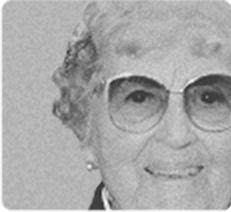
Annemarie Rexroth
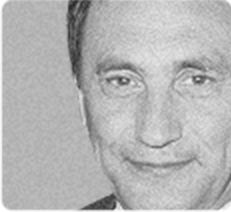
Eugen Tatarko
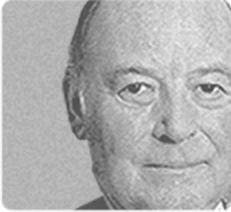
Gerd Rexroth
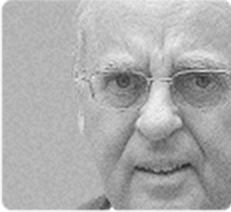
Bernd Rexroth